US Flags Pakistan Army Chief Asim Munir as Risk to Trump Administration
Synced from Source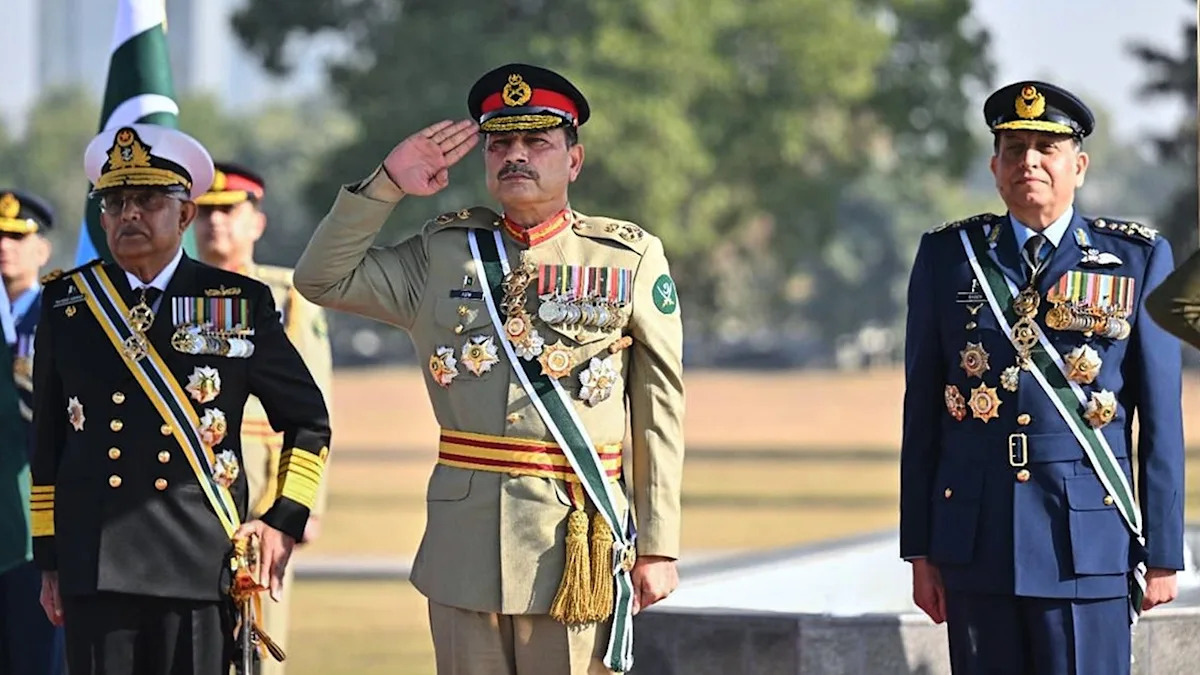
WASHINGTON: US intelligence has identified Pakistan's army chief, Asim Munir, as a potential risk for the Trump administration due to his deep ties with both US officials and Iranian military. Retired generals emphasize Munir's role as an informal backchannel between Washington and Tehran, which raises concerns about his allegiance.
WASHINGTON: The U.S. intelligence community has raised an alarm regarding Pakistan's army chief, General Syed Asim Munir, identifying him as a potential risk to the Trump administration's national security strategy. This development comes amid controversy surrounding Munir's growing relationships both with American officials and the military hierarchy of Iran, leading analysts to question the implications of his dual connections.
Recently, President Donald Trump publicly lauded Munir as an "exceptional man" and "my favorite field marshal" in a post. This acknowledgment highlights Munir's prominent position; he has transformed into a key figure trusted by both the Pakistani leadership and Iranian military commanders, a rarity in modern geopolitics. His robust ties with Iran began to form when he served as Pakistan's director general of military intelligence, fostering direct communications with various components of the Iranian defense establishment.
Experts like Retired General Ahmed Saeed have noted Munir's continued efforts to maintain relations with Iran's intelligence community, including the Islamic Revolutionary Guard Corps. "He interacts with their leadership," Saeed stated, indicating that his influence spans across military and diplomatic spheres in Iran. The warm reception Munir received during his recent visit to Iran, where he met high-ranking officials, supports this narrative of trust and cooperation.
However, this web of connections raises significant red flags as tensions between the U.S. and Iran remain fraught. Bill Roggio of the Foundation for Defense of Democracies cautions, "Trump should not trust the Pakistanis," highlighting Pakistan's historical role as a duplicitous ally in Afghanistan. Munir's connections to Iran's military are thus viewed with skepticism by some U.S. observers, suggesting that the Trump administration may need to reconsider the implications of its relations with Munir and Pakistan.
The unfolding situation is complex. As Munir continues to maintain communicative bridges between conflicting sides, his role as a mediator could either stabilize or exacerbate tensions, threatening U.S. interests in the region. For everyday Americans, understanding these international dynamics is crucial, as they unfold against the backdrop of ongoing geopolitical tensions and the quest for a peaceful resolution involving Iran, Pakistan, and the wider Middle East landscape.
Discussion
Loading comments...