Nepal Sees Massive Exodus as 800,000 Head Home to Vote
Synced from Source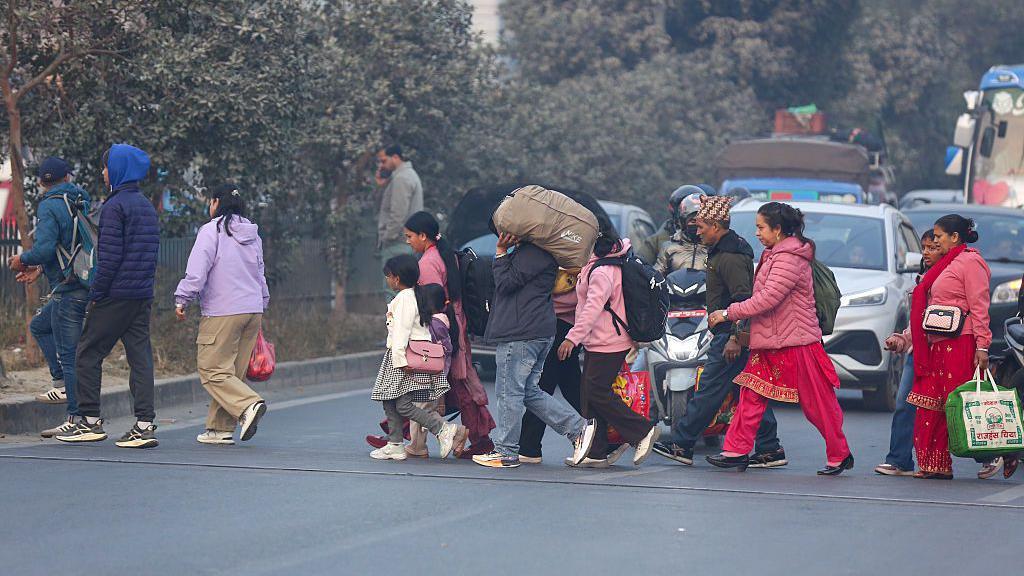
KATHMANDU: About 800,000 Nepalis have left the capital to vote in the upcoming elections. With heavy traffic and crowded highways, citizens are making long journeys to their registered constituencies. The election marks a significant moment following last year’s protests and sees nearly 19 million voters casting ballots for parliament.
KATHMANDU: In a significant mobilization ahead of the elections, around 800,000 Nepalis have left the Kathmandu Valley over the past week to return to their hometowns to vote. Authorities report that this mass exodus reflects both civic duty and the requirements of Nepal's election laws, which mandate citizens to cast their ballots in their registered constituencies — often where they were born.
Visuals from the highways show throngs of voters boarding jeeps, vans, and minibuses, resulting in hours-long traffic jams as the capital empties. This election is particularly consequential as it represents the first since the youth-led anti-corruption protests that toppled the government in September 2025. Saroj Chapagain, one of the many citizens making a long trek, shared his determination, stating, "I have come home to cast my ballot in order to safeguard the constitution and the system."
However, not all voters share the same enthusiasm for the upcoming elections. Rabindra Singh Thakuri, an ophthalmologist, expressed concern over the possibility of a parliament "dominated by new faces." He believes that the traditional political parties hold the key to providing a meaningful future for Nepal, stating that inexperienced leaders may struggle to navigate the complexities of governance.
Tomorrow, approximately 19 million people, including almost a million first-time voters, will cast their votes to elect 275 members of parliament. The election format includes a mixed system with around 165 members selected via first-past-the-post voting while the remaining will be chosen through proportional representation. Notably, a significant portion of candidates — nearly a third of the 3,400 running — are under the age of 40, showcasing a generational shift in Nepal's political landscape.
In preparation for the election, the Nepal Election Commission has suspended all public and private transport services, barring essential services, and declared Wednesday through Friday as public holidays for the polls and the celebration of the festival of Holi. One of the most anticipated races will be in the Jhapa-5 constituency, where former Prime Minister KP Sharma Oli faces off against Balendra Shah, a rap artist known for his critical songs about the political elite. As the country readies for this pivotal moment, all eyes will be on how these elections shape Nepal's future.
Discussion
Loading comments...