Supreme Court to examine if CBSE’s three-language rule is ‘unreasonable’ on kids, resources
Synced from Source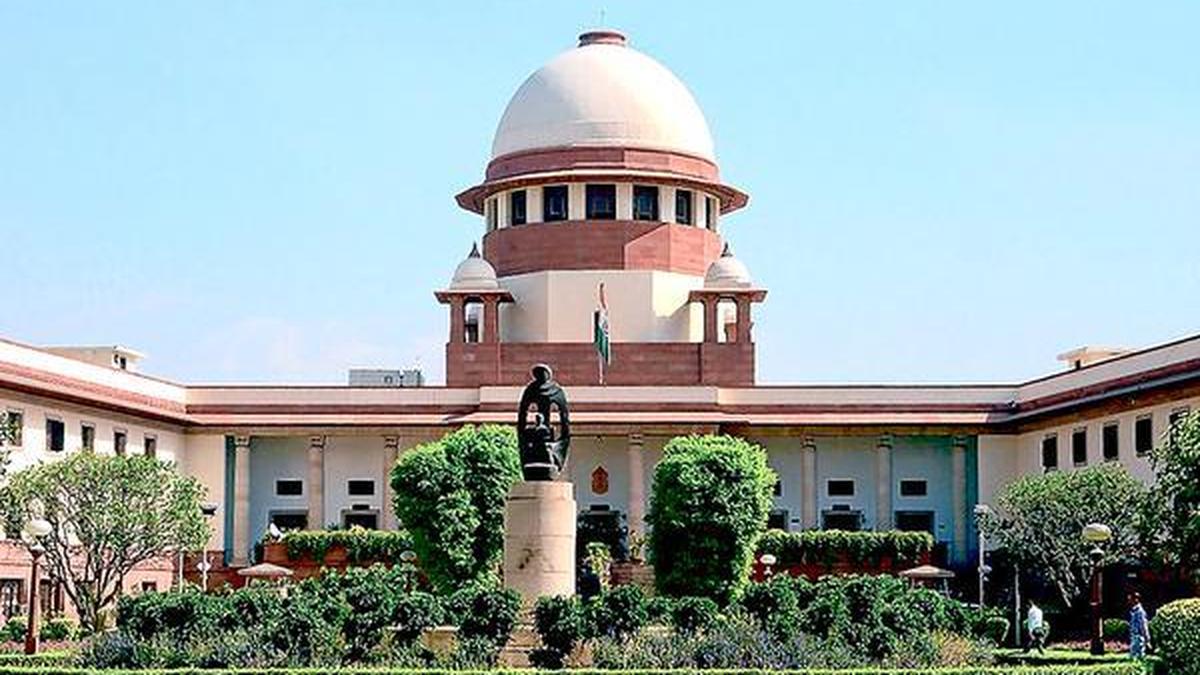
Supreme Court to examine if CBSE’s three-language rule is ‘unreasonable’ on kids, resources The Hindu
Subscribed with another email? Logout and Login with that one.
Account subscription benefits alongside Premium Stories, Editorials, Opinions and more. Unlock these with Subscription
The View From India Looking at World Affairs from the Indian perspective.
First Day First Show News and reviews from the world of cinema and streaming.
Today's Cache Your download of the top 5 technology stories of the day.
Science For All The weekly newsletter from science writers takes the jargon out of science and puts the fun in!
Data Point Decoding the headlines with facts, figures, and numbers
THEdge At the cutting edge of education and careers
Health Matters Ramya Kannan writes to you on getting to good health, and staying there
Gender Agenda Stories from beyond the binary.
The Hindu On Books Books of the week, reviews, excerpts, new titles and features.
Updated - May 28, 2026 06:32 am IST - NEW DELHI
Supreme Court to review plea against CBSE’s mandatory three-language policy for Class 9 students. File | Photo Credit: S. Subramanium
The Supreme Court on Wednesday (May 27, 2026) agreed to examine if the Central Board of Secondary Education’s (CBSE) three-language rule, set to be effective from July 1 for Class 9 students, has placed unreasonable pressure on resources and children.
A three-judge Bench headed by the Chief Justice of India Surya Kant said the court was more concerned about the logistical and factual challenges of implementing this policy in the face of a dearth of teachers and books.
When senior advocate Kapil Sibal said the policy violated principles of federalism and the right of choice, the Bench said the argument could be turned on its head to submit that learning more languages would work to benefit the spirit of federalism.
Also read | Why is the three-language policy controversial? | Explained
“Somebody can say learning three languages strengthens the federal structure,” Chief Justice Kant addressed Mr. Sibal.
Justice Joymalya Bagchi, on the Bench, said the focus of the petition was “that the implementation was unreasonable… That books are not there, adequate teachers are not there”.
The court issued notice to the Central Government, the CBSE, and the National Council of Educational Research and Training (NCERT) on a petition challenging the mandatory three-language rule.
The Chief Justice asked if the policy warranted any exam in Class 10. Senior advocate Mukul Rohatgi, also for the petitioners, submitted there would be an “internal assessment”.
Discussion
Loading comments...