CBSE makes three-language formula mandatory for Class 9 from 2026
Synced from Source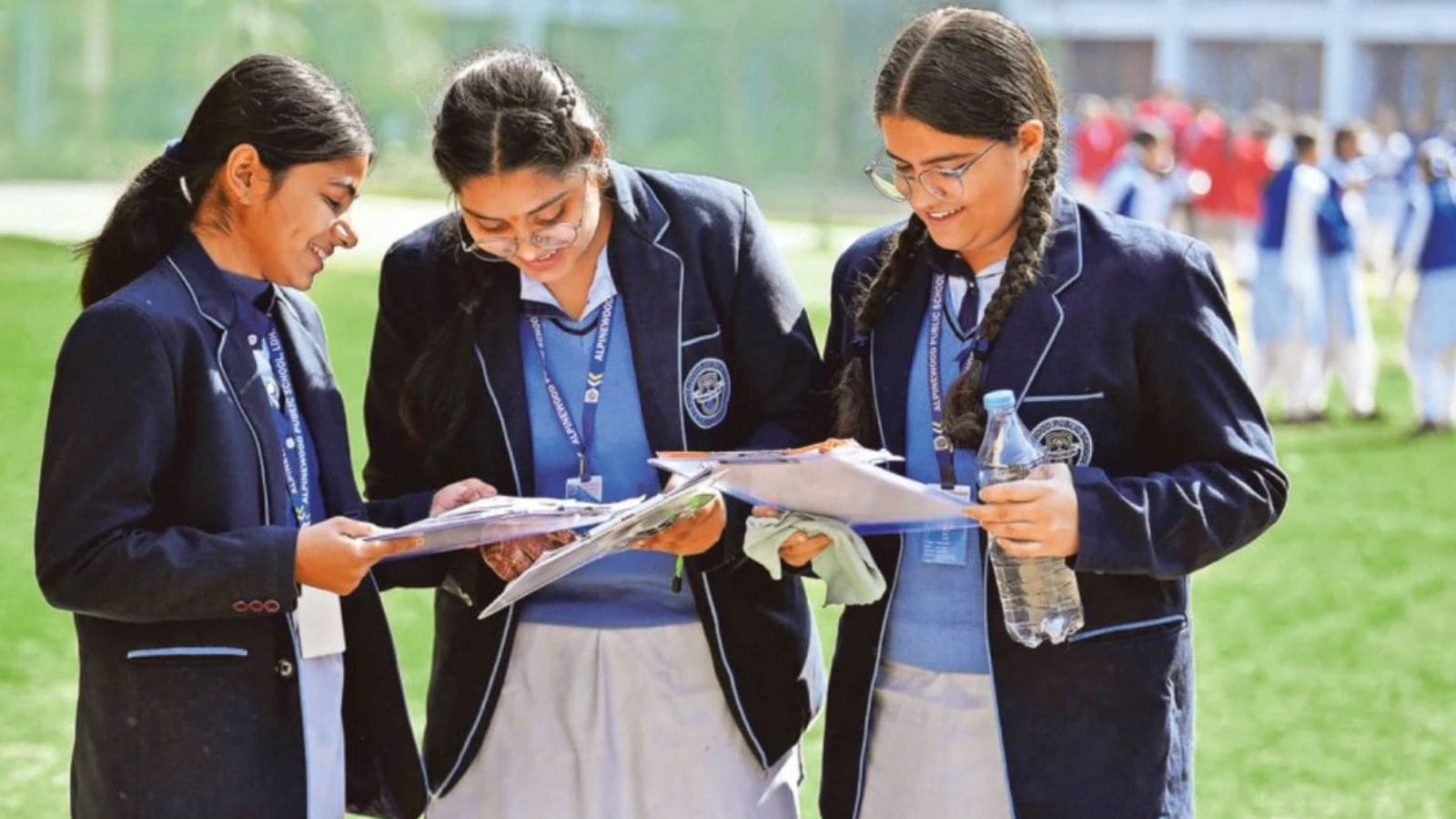
CBSE makes three-language formula mandatory for Class 9 from 2026 The Indian Express
A month after it released its new school curriculum, announcing that a third language would be made compulsory in Class 6 from the current academic session (2026-27), the Central Board of Secondary Education (CBSE) has made three languages — including at least “two native Indian languages” — compulsory for Class 9 students from July 1 this year.
The third language will be exempted from the Class 10 board examination, with its assessment to be “entirely school-based and internal”.
The curriculum announced in April had taken a phased approach to implementing the three-language formula (R1, R2, R3), making it mandatory only in Class 6 this year. So, students who are in Class 6 in the current academic session would have been the first cohort to have R3 in Class 10 in 2030-31.
But in its latest circular issued on Friday, the Board changed its earlier decision to not make R3 compulsory in Class 9 immediately, and explained that the scheme of studies for languages in Classes 9-10 is being aligned with the NCERT syllabus.
“With effect from 1st July 2026, for Class IX, the study of three languages (R1, R2, R3) shall be compulsory, with at least two languages being native Indian languages,” it said. “Students who wish to study a foreign language may do so as the third language only if the other two languages are native Indian languages, or as an additional fourth language,” it said.
For schools that have English as the medium of instruction, English becomes the one language that is not native to India that they can teach, leaving no room for another foreign language.
“In this context, the Board has carefully reviewed the recently released NCERT syllabus for Class IX (2026-27), which includes the study of three languages (R1, R2, R3) at the secondary stage. Given that the current academic session commenced in April 2026, CBSE has decided to adopt a transitional approach to align its scheme of studies with the NCERT syllabus,” it said.
The secondary school curriculum has also been revised accordingly, and reflects the “transitional approach” — Class 9 students this year will learn from Class 6-level R3 textbooks, and Class 10 students next year will learn from Class 7-level R3 books.
“To keep the focus on learning and reduce any undue pressure on students, no board examination shall be conducted for R3 at the Class X level,” it said. “All assessments for R3 shall be entirely school-based and internal. The performance of students in R3 will be duly reflected in the CBSE certificate,” it said.
The board also assured that “no student will be barred from appearing in the Class X board examinations due to R3.”
On the availability of teachers, the board said that schools may “engage existing teachers of other subjects who possess functional proficiency” in the language. It also allowed “inter-school resource sharing… virtual or hybrid teaching support” and the engagement of retired teachers.
Schools have been asked to update their language options on the board’s OASIS portal by June 30.
The Board has allowed relaxations for children with special needs, foreign students and CBSE schools abroad, permitting flexibility in implementing the third language requirement on a case-by-case basis.
The National Curriculum Framework for School Education (NCFSE) 2023, which has been developed in line with the National Education Policy (NEP) 2020, recommends that students study a third language in Classes 6-10.
Sophiya Mathew is a Correspondent at The Indian Express, based in New Delhi. She joined the Delhi bureau in 2024, and has specialization in Integrated Multimedia Journalism from the Asian College of Journalism (ACJ), Chennai. Professional Background Core Beats: Her reporting is primarily focused on the Environment and Education. Specialization: She has gained recognition for her ground-level reporting on the Yamuna floodplains and the socio-economic challenges faced by those living on its banks. She also focuses on the disparities in Delhi's education system, ranging from elite private schools to government institutions and refugee education. Recent Notable Articles (December 2025) Her recent work has been heavily centered on Delhi's severe winter pollution crisis and the government's regulatory responses: 1. The Air Pollution Crisis "A tale of two cities: Delhi govt schools choke in bad air, private classrooms set up air filters" (Dec 20, 2025): A high-impact feature contrasting the "Clean Air Bubbles" in elite schools with the reality of government school students who are exposed to an equivalent of 17 cigarettes a day due to outdoor exposure. "Delhi sees season's worst air day, second worst December AQI in nearly a decade" (Dec 15, 2025): An analytical report on the meteorological patterns trapping pollutants in the NCR. "Delhi bans non-BS VI vehicles from outside: Why curbing vehicular pollution is key" (Dec 17, 2025): Explaining the science behind targeting specific vehicle vintages to lower particulate matter. 2. Enforcement & Regulations "No fuel at pumps in Delhi without valid PUC certificate from December 18" (Dec 17, 2025): Breaking the news on the environment ministry's strict "No PUC, No Fuel" policy. 3. Education Policy "Law to regulate school fee in Delhi risks becoming procedural, say parents" (Dec 13, 2025): Investigating the loopholes in the new Delhi School Education (Transparency in Fixation and Regulation of Fees) Bill, 2025. "Monsoon Session: Private school fee regulation Bill cleared after four-hour debate" (Aug 9, 2025): Covering the legislative passage of the controversial fee hike regulation. Signature Style Sophiya is known for her observational depth. Her reporting often includes vivid details from school corridors, hospital waitlists, or the banks of the Yamuna to illustrate how policy failures affect the city's most vulnerable residents. She is a frequent expert guest on the 3 Things podcast, where she explains the complexities of Delhi’s environmental laws. X (Twitter): @SophiyaMathew1 ... Read More
Discussion
Loading comments...