India Supreme Court Navigates Morality Debate in Sabarimala Case
Synced from Source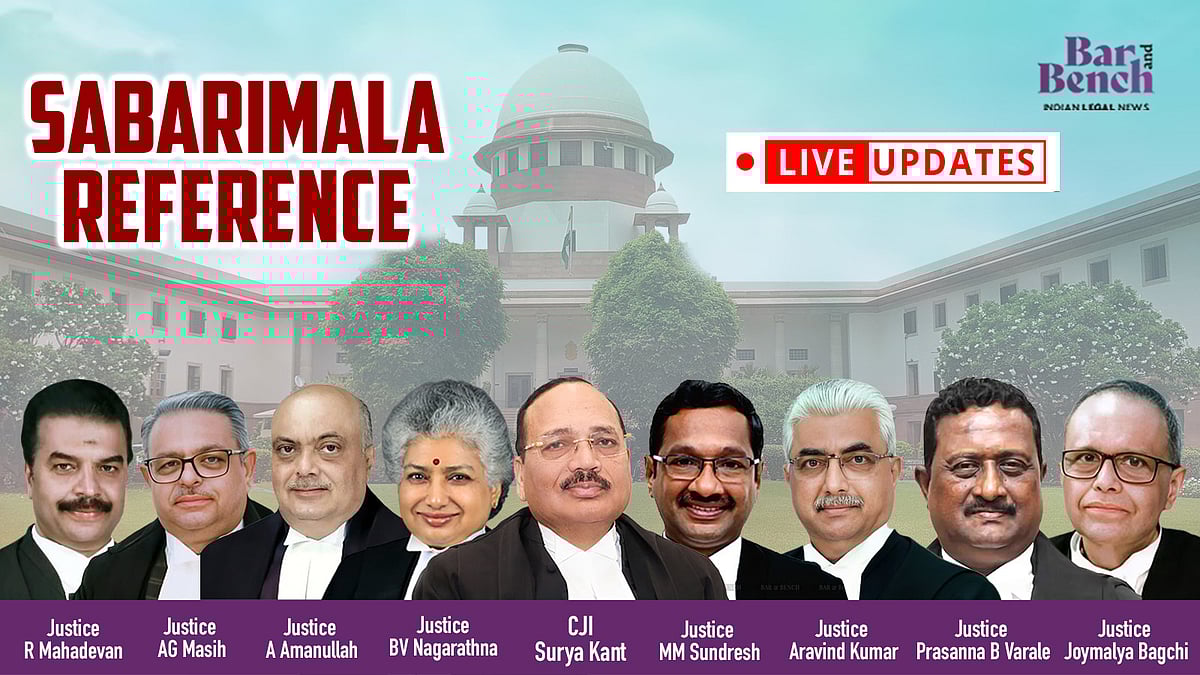
NEW DELHI: The Supreme Court of India engaged in critical discussions about societal and constitutional morality in the ongoing Sabarimala case. Justices debated the evolving nature of morality and the separation of religion and state. The outcome may redefine the understanding of religious practices in India.
NEW DELHI: The Supreme Court of India commenced its second day of deliberations in the highly anticipated Sabarimala reference case, engaging in intricate discussions about the concepts of societal and constitutional morality. The nine-judge bench, including prominent figures like Justice B.V. Nagarathna and Justice Joymalya Bagchi, navigated the complexities of how morality has evolved over time, especially in relation to religious practices.
Justice Nagarathna opened the conversation by addressing the shift in standards from the 1950s to today, stating, “With the passage of time in Indian society, what was once considered immoral is no longer regarded as such.” Her comments suggest a growing recognition that societal norms are not static but evolve as India progresses. The justices faced the challenge of balancing individual freedoms with traditional moral views and whether state intervention is warranted in matters perceived as theological.
SG Tushar Mehta raised critical questions about how “morality” is understood legally, pointing out the importance of distinguishing between constitutional and societal morality. The session further explored significant precedents and the implications of these concepts on Articles 25 and 26 of the Indian Constitution, which delineate the right to freedom of religion. The discourse reflected a broader debate on the secular character of Indian society and how it applies to diverse religious practices.
Observers noted that the outcomes of the Supreme Court's deliberations could significantly impact the future of religious regulation in India. The judiciary's final ruling will not only address the specific practices at Sabarimala but may also set a precedent for how other religious denominations are governed, ultimately influencing the intersection of law, faith, and individual rights in the nation. This pivotal case underscores the ongoing struggle within Indian society to reconcile diverse beliefs with constitutionally guaranteed freedoms, making it a focal point of legal and societal discourse for years to come.
Discussion
Loading comments...