Will the US–Venezuela conflict spike India’s oil import bill? Analysts reveal the real impact on trade
Synced from Source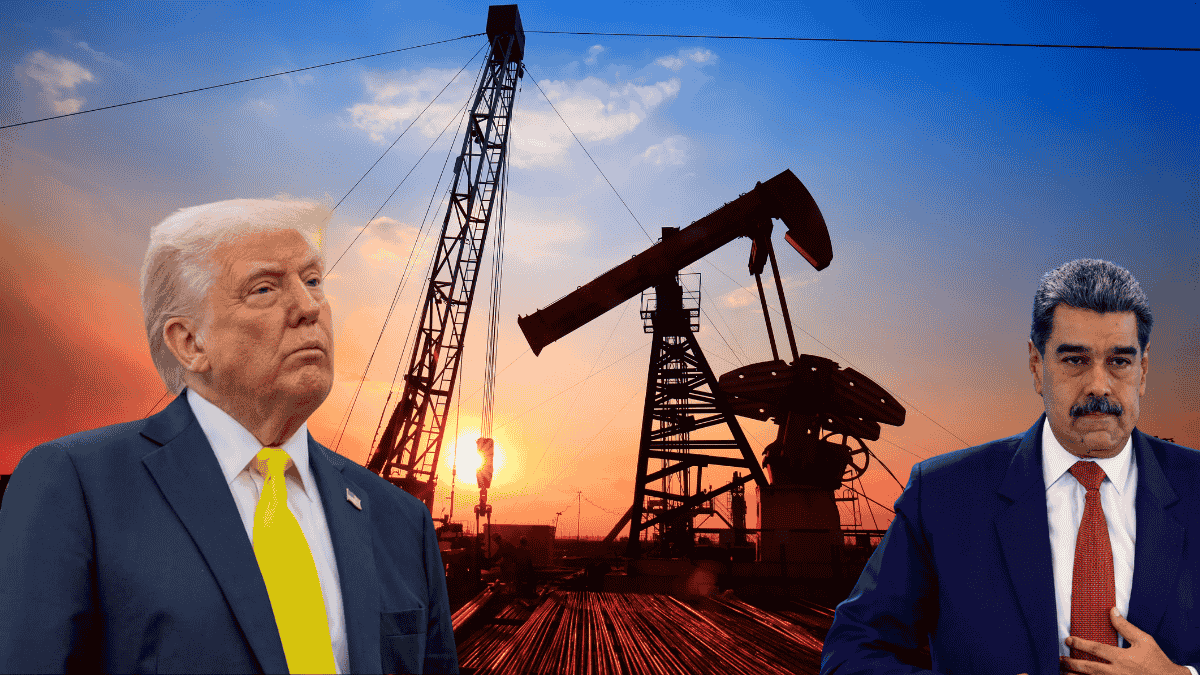
U.S.-Venezuelan conflict not to impact India’s trade: GTRI The Hindu
Amid escalating tension between the US-Venezuela and caputure of Venezuela’s President, the investors are calibrating the impact of conflict on India (if any) as Venezuela sits atop the world’s largest proven oil reserves. Analysts however believe that the conflict may have negligible impact on India’s trade with the South American country.
According to GTRI, In FY25, India’s total imports from Venezuela were just $364.5 million, of which crude oil accounted for $255.3 million, an 81.3% drop from $1.4 billion in crude imports in FY24. “India faces negligible impact, as trade with Venezuela has collapsed under sanctions, with crude imports down 81.3% in FY25 and overall bilateral trade remaining marginal,” the Global Trade Research Initiative (GTRI) Founder Ajay Srivastava said according to PTI.
However here is a look at the key Indian businesses with exposure to Venezuela and what it means for trade between India-Venezuela going forward.
Presently, Russia is the top oil import destination for India. India was a major buyer of Venezuelan crude in the 2000s and 2010s. However, bilateral engagement has weakened sharply since 2019 due to US sanctions, which forced India to cut oil imports and scale back commercial activity to avoid secondary sanctions.
Oil companies like ONGC Videsh, Indian Oil Corporation, Oil India and Reliance Industries are in focus as Venezuela holds about 18% of the world’s oil reserves, more than Saudi Arabia (around 16%), Russia (about 5-6%), or the United States (around 4%).
ONGC Videsh (OVL) holds equity stakes in two oil projects in Venezuela, marking one of India’s most direct upstream exposures in the country.
Indian Oil Corporation (IOC) is a consortium partner in Venezuela’s Carabobo heavy-oil project and has exposure through equity participation.
Oil India is a minority partner in a Venezuelan oil joint venture alongside OVL and IOC.
Reliance Industries has historically been a major importer of Venezuelan crude, while Nayara Energy has also imported heavy crude from Venezuela in the past. Mangalore Refinery and Petrochemicals (MRPL), according to reports, has historically sourced Venezuelan oil as well.
India’s exports to Venezuela were modest at $95.3 million, led by pharmaceuticals worth $ 41.4 million. However, here is ho Indian pharmaceutical companies have links with Venezuela. Sun Pharma has a registered subsidiary in the country, while Dr. Reddy’s Laboratories earlier had a subsidiary but divested its entire stake in 2024. Cipla has historically exported essential medicines to Venezuela, and Glenmark Pharma operates in the country through its locally registered subsidiary.
The impact on the auto sector is also marginal. Bajaj Auto, according to PTI, said its exports to Venezuela account for less than 1% of its total overseas shipments.
“We do export to Venezuela. Pulsar and Boxer are very popular, but these exports are less than 1% of our total exports,” Rakesh Sharma, Executive Director at Bajaj Auto, told PTI, responding to a query on the implications for its operations following the capture of Maduro by the US.
Another Indian automaker, TVS Motor Company, told PTI that it has no meaningful presence in Venezuela.
For now it is a wait and watch situation. The immediate impact is very limited for India. All eyes are on what the future may potentially unfold.
Deputy Chief Minister Eknath Shinde has assured that Hindi will not be made compulsory in Maharashtra and that the government will protect Marathi. His remarks came ahead of the upcoming BMC election on January 15, where the Thackeray brothers have formed an alliance, which will be closely watched, with a shared manifesto titled “Vachan Nama” being released.
Discussion
Loading comments...