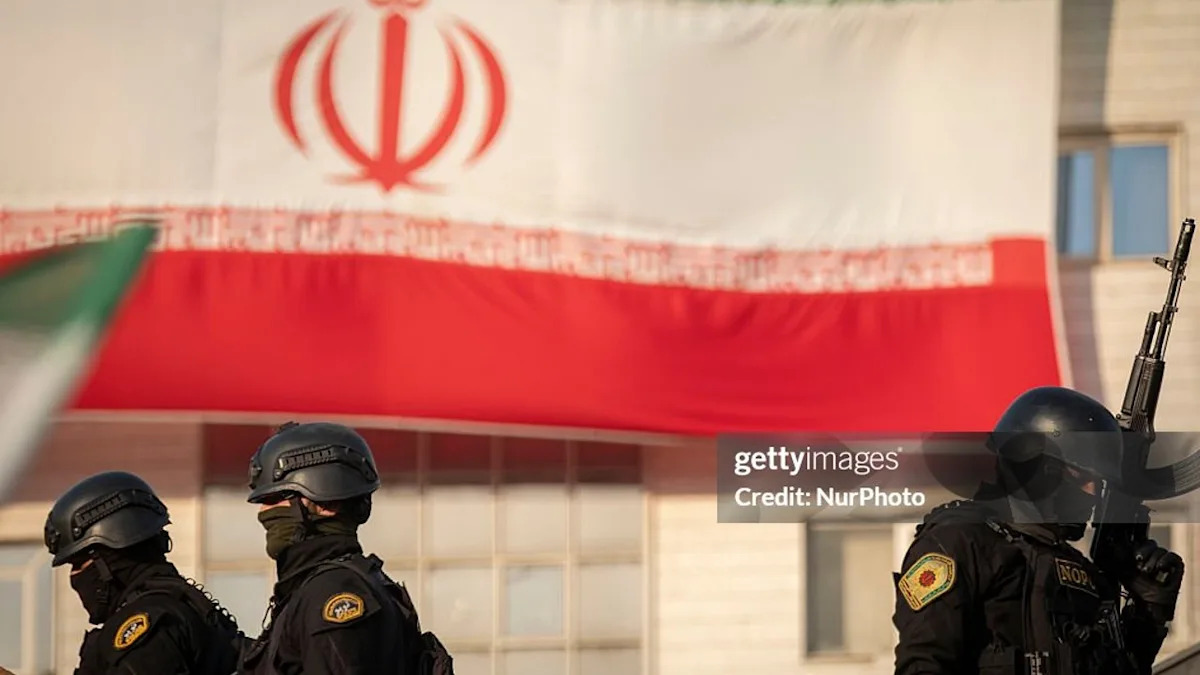
WASHINGTON: Iran has named 18 U.S. tech companies—including Intel—as “legitimate targets” for strikes in retaliation for past assassinations. Intel responded, prioritizing employee safety amid escalating tensions. This poses significant risks to U.S. investments in the region’s technology infrastructure.
WASHINGTON: In a bold move amidst rising geopolitical tensions, Iran’s Islamic Revolutionary Guard Corps (IRGC) has publicly designated 18 American technology and defense firms as “legitimate targets.” This list includes heavy hitters like Intel, Nvidia, Apple, Microsoft, and Google, all warned to brace for potential attacks at their facilities across the Middle East. The IRGC has set a deadline of 8 p.m. Tehran time on Wednesday to initiate strikes, justifying the threats as retaliation for U.S. and Israeli actions against Iranian leaders.
The IRGC’s ominous declaration was shared on a Telegram channel and reported by the semi-official Tasnim news agency, stating, “From now on, for every assassination, an American company will be destroyed.” The organizations targeted are accused of participating in the tracking and design of operations leading to the killings of key political figures, including Supreme Leader Ali Khamenei. Consequently, the IRGC has ordered immediate evacuation instructions for employees of the identified companies, as well as residents living near their facilities across the region.
Intel, as the first company to respond, emphasized that the safety of its team members is its “number one priority,” indicating proactive measures to secure personnel and infrastructure in the Middle East. Meanwhile, tech giants Microsoft, Google, and JPMorgan have opted to remain silent regarding the threats. This escalation follows an earlier Iranian attack on Amazon Web Services' installations in the UAE and Bahrain, which had caused significant service interruptions.
The implications of the IRGC’s threat extend beyond immediate safety concerns. With U.S. tech firms having established considerable investment in the region—driven by favorable energy costs and ample land—this attack could disrupt substantial technological infrastructure valued in billions. As part of a broader regional buildup in artificial intelligence, these facilities are critical hubs for cloud computing and digital services.
As tensions rise, the backdrop of ongoing conflict between the U.S. and Iran includes instability in oil prices and potential hindrances to the global economic outlook, with Brent crude crossing $100 a barrel for the first time since 2022. As both sides communicate mixed signals about their intentions for de-escalation, many American companies have already begun adapting by relocating personnel to remote working conditions.
Discussion
Loading comments...