India: Modi's Women's Quota Plan Fails in Parliamentary Vote
Synced from Source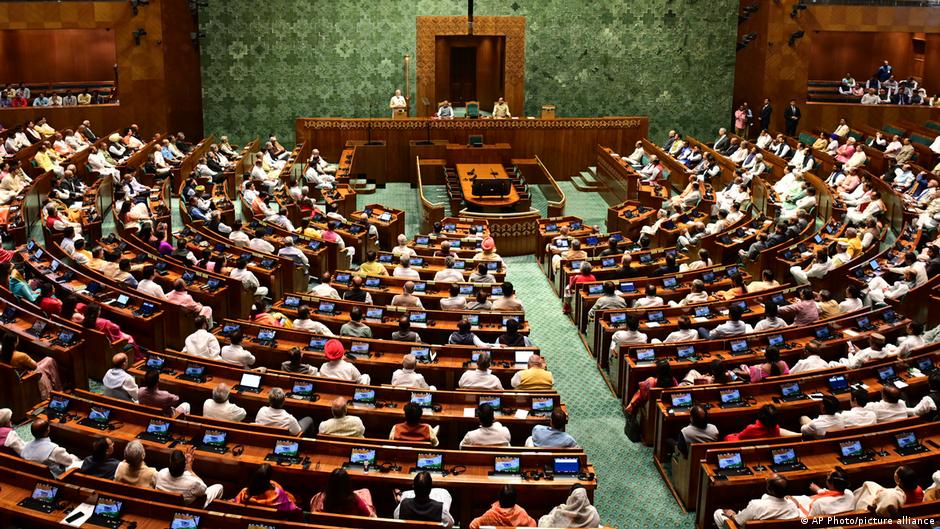
NEW DELHI: India's plan to introduce a women's quota in Parliament failed to secure enough votes. Prime Minister Narendra Modi's proposal faced backlash, leading to its rejection in the Lok Sabha. Critics argue the government's approach was a political maneuver ahead of upcoming elections.
NEW DELHI: In a significant legislative defeat for Prime Minister Narendra Modi's government, the proposed women's quota bill aimed at increasing female representation in Parliament was rejected by lawmakers in the Lok Sabha. The Constitution (131st Amendment) Bill, 2026, which was initially introduced to great anticipation, fell short of the required two-thirds majority in a vote that showcased deep political divides.
During the parliamentary session, intense discussions unfolded over the bill, which linked the women's reservation to a contentious delimitation process that would redraw constituency boundaries across India based on population shifts. While there was broad support for the notion of enhancing women's representation, opposition parties expressed fears that the proposed constituency changes would primarily benefit Modi’s Bharatiya Janata Party (BJP) ahead of the 2029 general elections.
"The amendment bill has fallen. They used an unconstitutional trick in the name of women to break the Constitution," stated Rahul Gandhi, the Leader of the Opposition, following the vote. The government's assertion that delimitation was necessary to reflect demographic changes since the last census in 1971 was met with skepticism, with critics pointing to the timing of the proposal as politically motivated.
Ultimately, out of the 528 members present, only 298 voted in favor, while 230 opposed the bill. Home Minister Amit Shah, speaking passionately before the vote, insisted that women across India were counting on this legislative move, indicating the government's commitment to pushing the agenda despite setbacks.
The failure of this bill marks a critical juncture in India's legislative progress regarding gender representation, as its passage could have significantly reshaped the dynamics of electoral politics for years to come. The Modi government remains determined to advocate for women's quotas, despite the recent political blow, reaffirming its long-term commitment to empowering women within the political sphere.
Discussion
Loading comments...