Bhumjaithai Party Claims Victory in Thailand's General Election
Synced from Source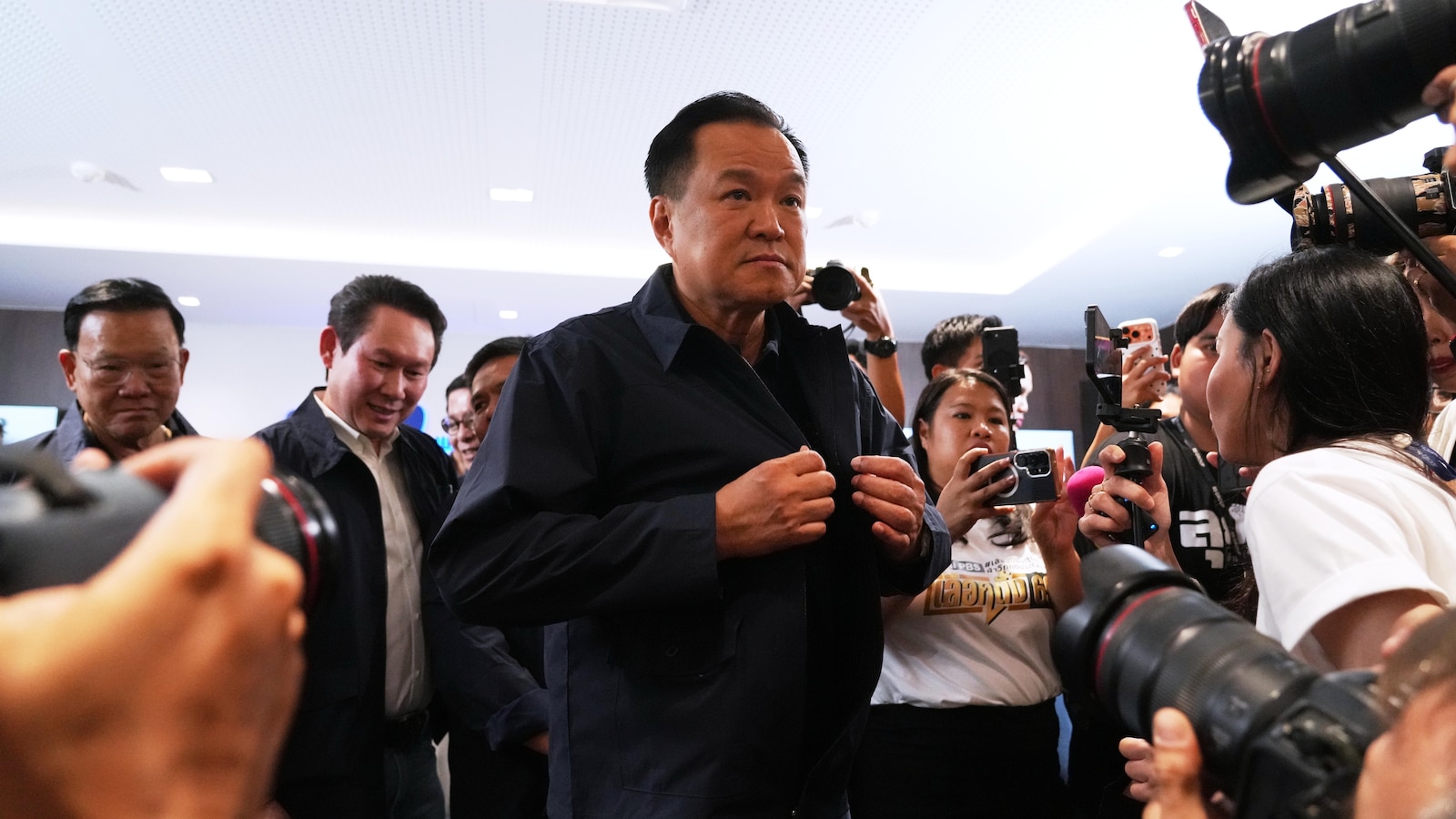
BANGKOK: The Bhumjaithai Party led by Prime Minister Anutin Charnvirakul is projected to win the most seats in Thailand’s recent election, defying earlier predictions. With approximately 193 seats secured in the House of Representatives, coalition talks are expected to commence. A referendum also indicated a significant push for the drafting of a new constitution.
BANGKOK: The Bhumjaithai Party, headed by Prime Minister Anutin Charnvirakul, is on track to secure the most seats in Thailand’s general election, according to unofficial results released by the state Election Commission. With nearly 94% of polling stations reporting, Bhumjaithai is projected to win around 193 of the 500 available seats in the House of Representatives, which marks a decisive victory for a conservative party in Thailand after years of political fragmentation.
Voter turnout for the election hovered around 65%, a significant decrease compared to the previous year. Sunday’s election unfolded amid a backdrop of sluggish economic growth and rising nationalist sentiment, contributing to Bhumjaithai's electoral success. The House consists of 400 lawmakers directly elected from local constituencies and an additional 100 lawmakers chosen from party lists based on proportional voting.
The results indicate that Bhumjaithai will need to form a coalition, as a simple majority of 251 seats is required to elect the prime minister. The second-place People's Party, which was widely predicted to lead, has garnered approximately 118 seats, performing well in Bangkok and surrounding areas. Meanwhile, the populist Pheu Thai Party, associated with former Prime Minister Thaksin Shinawatra, trails significantly with only 74 seats, raising questions about their future political influence.
Anutin Charnvirakul, who became prime minister just last September, saw his popularity wane earlier but rebounded due to recent border clashes with Cambodia, which allowed him to present himself as a leader focused on national security. "Bhumjaithai capitalized on traditional patronage networks and positioned itself strategically to avoid vote splitting," noted Napon Jatusripitak, director of the Center for Politics and Geopolitics in Bangkok. He added that the results might indicate new stability in Thailand’s tumultuous political landscape.
In addition to the parliamentary elections, voters participated in a referendum regarding the potential replacement of the 2017 military-drafted constitution, with roughly 60% in favor of initiating a drafting process for a new constitution. This vote could signal a shift towards a more democratic framework in Thai governance, should the drafting efforts proceed through the parliamentary processes.
Discussion
Loading comments...