Study Suggests Dark Matter May Interact with Neutrinos
Synced from Source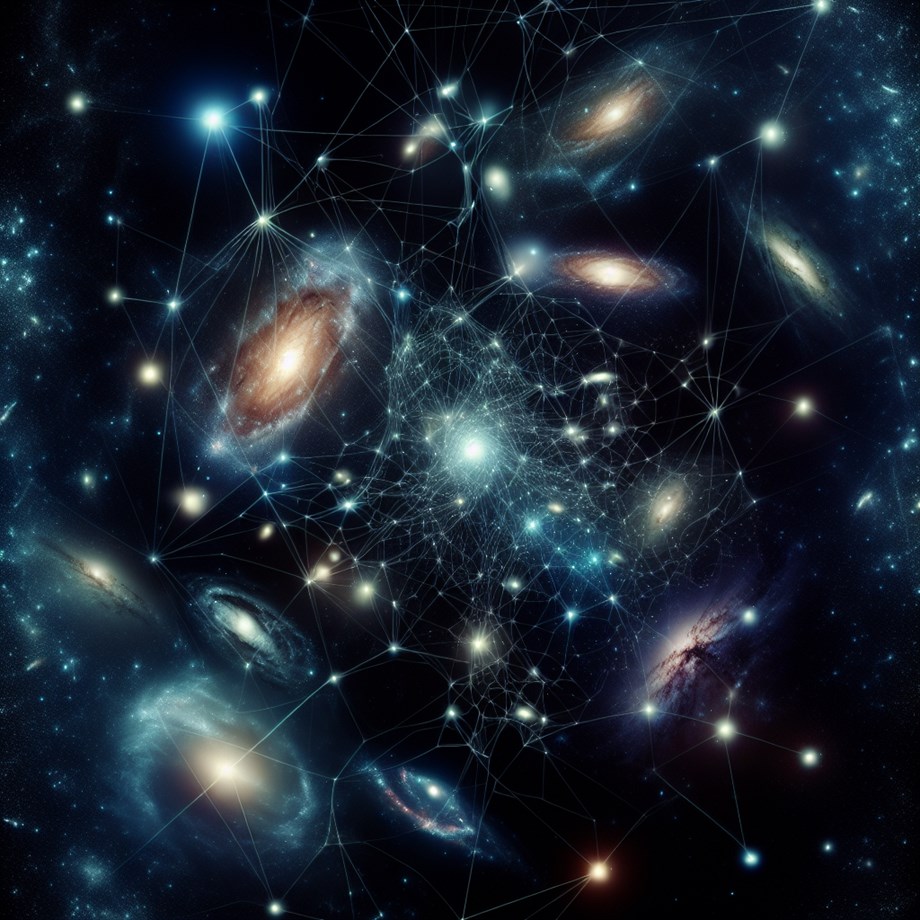
UNIVERSITY OF SHEFFIELD: New research suggests interactions between dark matter and neutrinos, challenging existing cosmological models. This potential breakthrough may help resolve discrepancies in cosmic structure growth, reshaping our understanding of the universe's evolution.
Scientists have made a groundbreaking discovery regarding the nature of the universe, revealing evidence that dark matter may interact with neutrinos, the ghostly subatomic particles known to be challenging to detect. This research from the University of Sheffield presents a significant shift in our understanding of cosmological principles, pushing the boundaries of established scientific knowledge.
Dark matter, which constitutes approximately 85% of the universe's total matter, has long been a mystery in astrophysics due to its elusive properties. The study suggests that its potential interactions with neutrinos could have profound effects on the formation and evolution of cosmic structures. This interaction contradicts the established Standard Model of Cosmology, which has been the foundation for much of our understanding of the universe thus far.
Support for this theory comes from data collected by cutting-edge observational instruments, including the Atacama Cosmology Telescope and the Planck Telescope. The findings not only propose a potential answer to discrepancies observed in the growth of cosmic structures but also open the door for future research, encouraging scientists to explore further into how these fundamental particles may alter the dynamics of the universe.
This revelation has significant implications for both physics and cosmology, leading researchers to rethink traditional models and consider new theories that could reshape our comprehension of cosmic phenomena. As inquiries into dark matter and neutrinos continue to evolve, this study could indeed mark a turning point in the quest to decode the mysteries of the universe.
Discussion
Loading comments...