Students Protest at JNU, Chant against Modi and Shah after SC Verdict
Synced from Source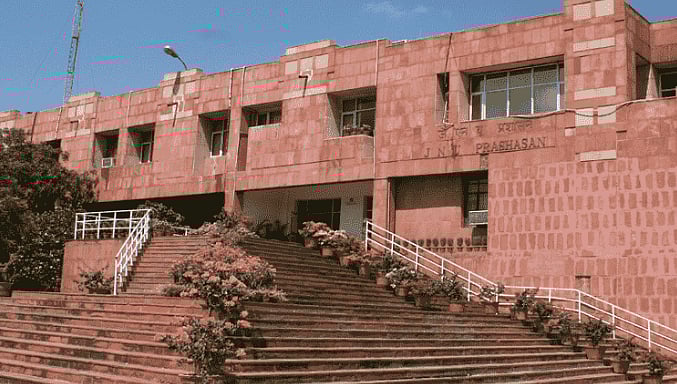
NEW DELHI: A protest at Jawaharlal Nehru University escalated as students chanted slogans against Prime Minister Narendra Modi and Union Home Minister Amit Shah following the Supreme Court's denial of bail to Umar Khalid and Sharjeel Imam. The JNU administration has requested police action against the students, sparking intense political reactions. While some condemned the slogans as extremist, others defended the right to protest amidst heated dialogue.
NEW DELHI: A protest at Jawaharlal Nehru University (JNU) triggered a significant controversy this week as students raised slogans against Prime Minister Narendra Modi and Union Home Minister Amit Shah. This demonstration stemmed from the Supreme Court denying bail to Umar Khalid and Sharjeel Imam, two individuals implicated in the conspiracy related to the 2020 Delhi riots.
In response to the uproar, the JNU administration sought police intervention, asserting that the slogans had crossed a line. The security chief of JNU formally requested the Delhi Police to file an FIR against the students accused of voicing “provocative” slogans during an event held outside Sabarmati Hostel. Originally aimed at marking the sixth anniversary of campus violence, the protest's tone shifted drastically following the Supreme Court’s ruling, sparking an online frenzy as videos of the slogans emerged.
JNU Students’ Union (JNUSU) general secretary Sunil Yadav affirmed the event was intended to remember the 2020 violence but refrained from commenting directly on the slogans raised. JNUSU president Aditi Mishra emphasized that the protest served as an annual event to denounce the past violence, claiming, “All of the slogans raised in the protest were ideological and do not attack anyone personally. They were not directed towards anyone."
Political responses quickly materialized, with leaders from the Bharatiya Janata Party (BJP) branding the slogans as a manifestation of "frustration" from individuals backing extremism. Meanwhile, Congress leaders defended the right to protest but expressed concern regarding the derogatory language used. Sandeep Dikshit, a prominent Congress figure, acknowledged, “Anybody has the right to protest against any court judgment. But I don't think the use of words like ‘kabr’ and all is acceptable.”
This event underscores the escalating tensions in Indian political discourse, particularly in the context of student activism and the government’s response to dissent.
Discussion
Loading comments...