Modi's Call to Trump Could Resolve U.S.-India Trade Deal Stalemate
Synced from Source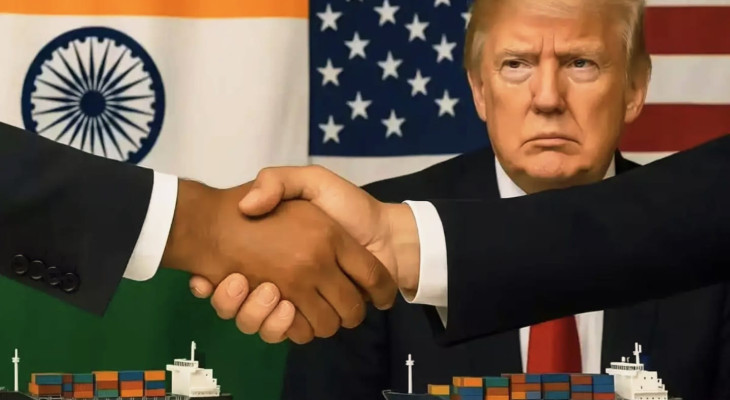
NEW DELHI: U.S. Commerce Secretary Howard Lutnick claims that the stalled U.S.-India trade deal results from Prime Minister Narendra Modi's failure to personally engage with U.S. President Donald Trump. Amid rising tariffs and export pressures, Modi's delayed communication may hinder India's economic ambitions in global markets.
NEW DELHI: As trade negotiations between India and the United States remain at an impasse, U.S. Commerce Secretary Howard Lutnick has shed light on a critical factor stalling the long-anticipated bilateral trade agreement. Lutnick revealed in a recent podcast that the negotiations were nearly complete but faltered because Prime Minister Narendra Modi did not reach out personally to U.S. President Donald Trump at a crucial moment.
"Let’s be clear, it’s his deal. He is the closer," Lutnick explained, stressing the necessity of direct, leader-level communication. “They were uncomfortable doing it. So, Modi didn’t call. That Friday left, in the next week we did Indonesia, the Philippines, Vietnam, we announced a whole bunch of deals,” he added, indicating that this lack of communication ultimately left India "on the wrong side of the see-saw" as the negotiations neared closure.
India's export tariffs to the U.S., currently at 50%, are the highest imposed on any Asian nation, primarily due to the assumption that India would finalize its agreement ahead of others. Lutnick noted that delays have allowed the U.S. to proceed with other trade pacts, leading to lost opportunities for India. “I negotiated with them at a higher rate," he said. “Now, the problem is that the deals came out at a higher rate, and then India claws back and says, 'Oh, okay, we are ready.' I said, ready for what?!”
Further complicating matters are rising trade tensions linked to India's energy dealings with Russia. The U.S. maintained its stringent tariffs in response to New Delhi's continued oil imports from Moscow, which Trump has indicated could escalate if India doesn’t comply with U.S. demands. As rumors of potential tariff hikes swirl, including proposals for up to a 500% increase on imports from Russia-affiliated nations, India has firmly stated that its energy decisions are dictated by market needs, not geopolitical pressures.
India has repeatedly resisted trading under duress. Union Minister Piyush Goyal emphasized, “We don’t do deals in a hurry, and we don’t do deals with deadlines or with a gun on our head.” While the stalled negotiations create uncertainty, the looming implications of further tariffs may strain India's trade relations, fuelling skepticism about the future prospects of an agreement with the U.S.
Discussion
Loading comments...