India Extends Parliamentary Session to Discuss Women's Reservation Act
Synced from Source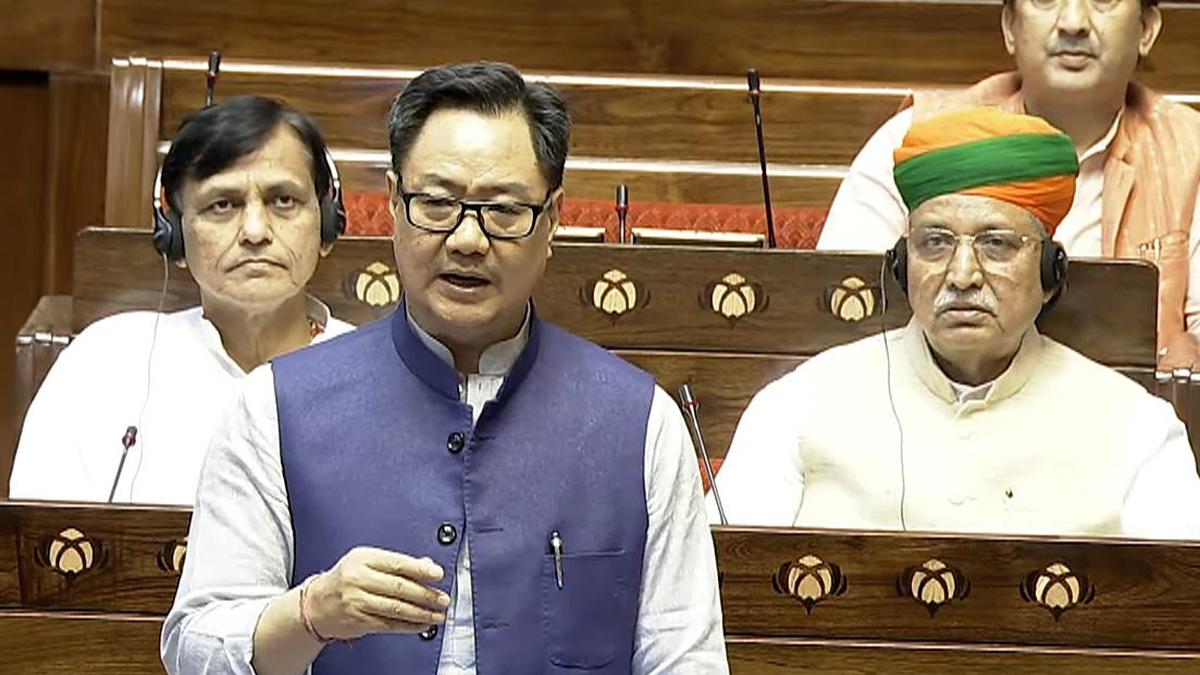
NEW DELHI: The Indian government has announced an extension of the Budget Session of Parliament until April 18, 2026, to accommodate discussions on amendments to the Women's Reservation Act. Union Minister Kiren Rijiju emphasized the government's commitment to fulfill its promise of 33% reservation for women in Lok Sabha and State Assemblies. Tensions arose with Congress raising concerns about the session's clarity amidst the election campaign.
NEW DELHI: In a significant development for gender representation in Indian politics, the Union government has confirmed the extension of the Budget Session of Parliament until April 18, 2026, to allow for the necessary debates on amendments to the Women’s Reservation Act, 2023. This legislation aims to allocate 33% reservation for women in the Lok Sabha and State Assemblies, a promise that the government, led by Union Parliamentary Affairs Minister Kiren Rijiju, is keen to fulfill.
During a session on April 2, Rijiju announced that there will be additional sittings to discuss the proposed amendments, though he did not specify this in his initial remarks. "The Parliament of India has made a promise to the women of this country. We have a bounden duty to fulfil that commitment," Rijiju stated, underlining the urgency and importance of this legislative agenda.
Amid mounting tension, opposition parties, particularly the Congress, have expressed their discontent over the government's handling of parliamentary proceedings. Congress Chief Whip Jairam Ramesh raised concerns regarding the lack of clear communication about the session's schedule, labeling it as detrimental to parliamentary transparency. He highlighted that Congress President Mallikarjun Kharge has called for an all-party meeting to discuss the legislative agenda, especially following the upcoming election campaign.
In response to these criticisms, Rijiju defended the government's actions, indicating that a considerable number of political factions had engaged in consultations regarding the legislative agenda. "We have reached out to almost 80% of political parties for discussions, with the Congress being the only significant party that has refrained from dialogue,” he claimed. As the political landscape unfolds in the lead-up to elections, the successful passage of the Women’s Reservation Act will be pivotal in reshaping women's political representation in India.
As the debate approaches, the coming weeks promise to be vital for both the future of women's representation in politics and the broader parliamentary environment amidst escalating electoral tensions.
Discussion
Loading comments...