India and New Zealand Sign Historic Free Trade Agreement
Synced from Source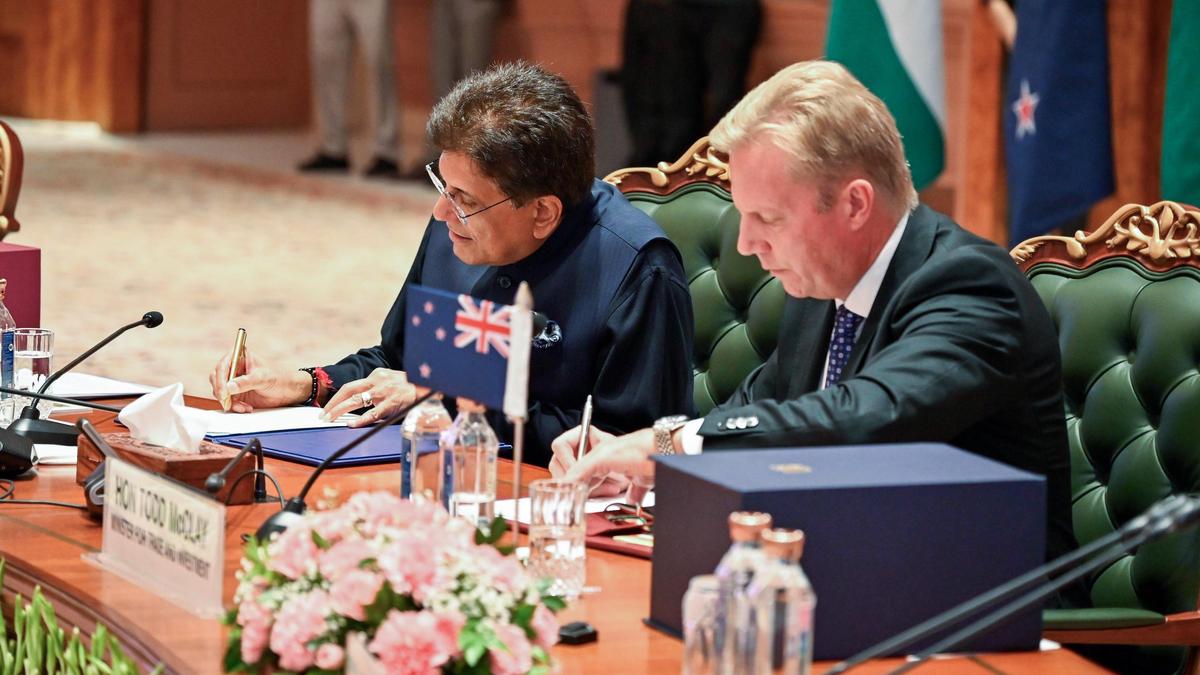
NEW DELHI: India and New Zealand have officially signed a Free Trade Agreement aimed at eliminating tariffs on a significant range of goods. The deal has been termed a "historic" development by both countries' leaders, emphasizing the enhancement of trade and investment relations.
NEW DELHI: In a significant move towards strengthening economic ties, India and New Zealand signed a Free Trade Agreement (FTA) on April 27, 2026. The agreement was finalized by Indian Union Minister of Commerce and Industry Piyush Goyal and New Zealand's Trade and Investment Minister Todd McClay in New Delhi. Both leaders heralded the FTA as a “historic” step that promises to deepen the trade, investment, and cultural ties between the two nations.
Under the terms of the agreement, New Zealand will eliminate all tariffs on goods imported from India, which is expected to boost Indian exports significantly. In return, India has committed to removing or reducing tariffs on 95% of imports from New Zealand. Goyal emphasized the mutual benefits of this agreement, stating, “This FTA not only signifies our commitment to increasing bilateral trade but also reflects our shared vision for economic growth."
The FTA is anticipated to have a substantial impact on various sectors, including agriculture, pharmaceuticals, and textiles. “This agreement is not just about trade; it’s about fostering a partnership that will benefit our people,” said McClay during the signing ceremony.
The importance of this agreement goes beyond mere economics. It symbolizes a strategic collaboration aimed at enhancing bilateral cooperation in a rapidly changing global landscape. For common citizens, this deal could lead to increased access to quality goods and services at lower prices and open new opportunities for businesses in both countries.
As the world emerges from economic uncertainties, the India-New Zealand Free Trade Agreement stands out as a positive development, promising to create growth and opportunities for both nations in the years to come.
Discussion
Loading comments...