China ‘mediated’ in Pakistan, India tensions: Wang Yi
Synced from Source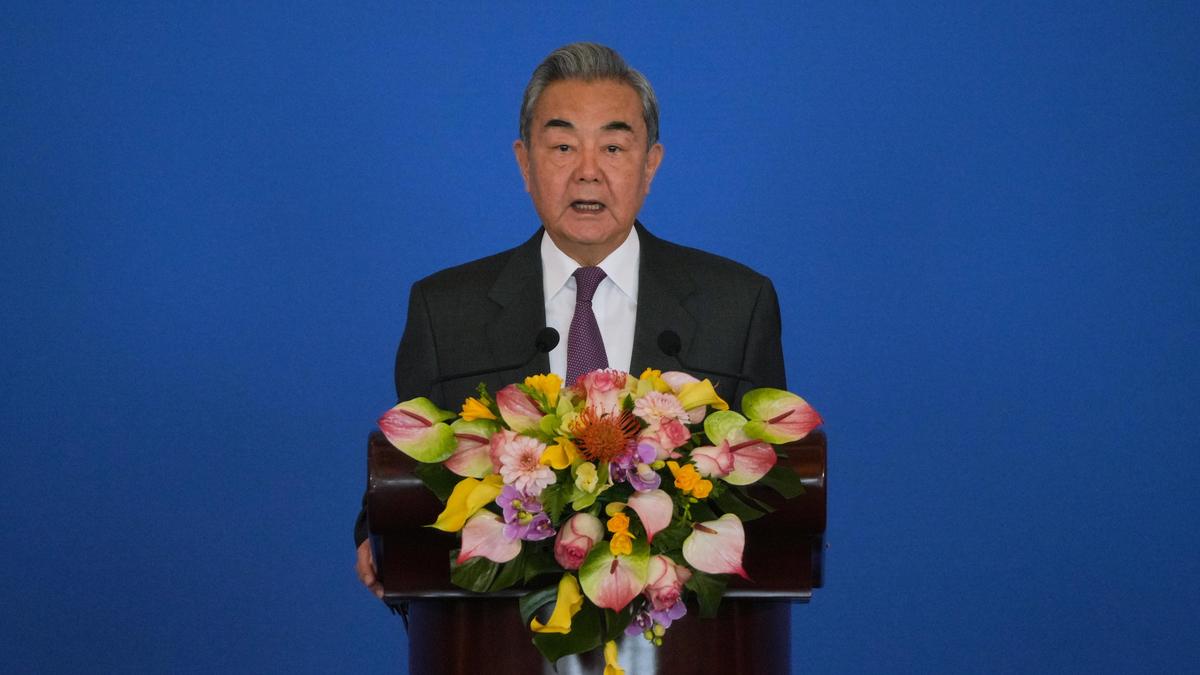
China ‘mediated’ in Pakistan, India tensions: Wang Yi The Hindu
The View From India Looking at World Affairs from the Indian perspective.
First Day First Show News and reviews from the world of cinema and streaming.
Today's Cache Your download of the top 5 technology stories of the day.
Science For All The weekly newsletter from science writers takes the jargon out of science and puts the fun in!
Data Point Decoding the headlines with facts, figures, and numbers
Health Matters Ramya Kannan writes to you on getting to good health, and staying there
The Hindu On Books Books of the week, reviews, excerpts, new titles and features.
Updated - December 31, 2025 01:28 am IST - Beijing
China's Foreign Minister Wang Yi delivers an opening speech on stage for the annual symposium on the international situation and China's foreign relations held by China Institute of International Studies at the Diaoyutai State Guesthouse, in Beijing on December 30, 2025. | Photo Credit: AP
Chinese Foreign Minister Wang Yi on Tuesday (December 30, 2025) said “tensions between India and Pakistan” were among the list of hotspot issues “mediated” by China this year.
New Delhi has been maintaining that the May 7-10 conflict between India and Pakistan was resolved through direct talks between the DGMOs (Director General of Military Operations) of the armies of the two countries. At the May 13 press briefing, the Ministry of External Affairs had said, “regarding ceasefire and what sort of role other countries played, etc. See, the specific date, time and wording of the understanding was worked out between the DGMOs of the two countries at their phone call on 10th May 2025, commencing at 15:35 hours.” India has also been consistently maintaining that there is no place for any third-party intervention in matters relating to India and Pakistan.
“This year, local wars and cross-border conflicts flared up more often than at any time since the end of WWII. Geopolitical turbulence continued to spread”, Mr. Wang said, speaking at the symposium on the “International Situation and China’s Foreign Relations” in Beijing.
“To build peace that lasts, we have taken an objective and just stance, and focused on addressing both symptoms and root causes”, he added. “Following this Chinese approach to settling hotspot issues, we mediated in northern Myanmar, the Iranian nuclear issue, the tensions between Pakistan and India, the issues between Palestine and Israel, and the recent conflict between Cambodia and Thailand”, he said.
China's role in the May 7-10 Operation Sindoor conflict between India and Pakistan this year came under serious scrutiny and criticism, especially the military assistance provided by Beijing to Islamabad.
On the diplomatic front, China, on May 7, called on India and Pakistan to exercise restraint even while expressing regret over India’s airstrikes. “China finds India’s military operation early this morning regrettable”, said a Chinese Foreign Ministry statement on the first day of Operation Sindoor, reacting to questions on India’s airstrikes and escalating tensions between India and Pakistan.
“China opposes all forms of terrorism”, a Chinese Foreign Ministry statement said in an apparent reference to the Pahalgam terrorist attack and urged both sides to exercise restraint in the interest of peace.
Also read | The new battle challenge of China-Pakistan collusion
But China’s active military support to Pakistan during Operation Sindoor in May has become a sharp reminder about the negative impact of China-Pakistan close ties on Beijing’s relations with New Delhi. For its part, China, whose arms exports amount to over 81% of Pakistan’s military hardware, sought to downplay India’s Deputy Chief of Army Staff, Lt General Rahul R Singh’s assertion that Beijing used the conflict as a “live lab”, declining to directly answer his charge.
Gen. Singh said China’s strategy during Operation Sindoor was based on its ancient military strategy of "36 stratagems" and killing the adversary with a "borrowed knife" to buttress the point that Beijing extended all possible support to Pakistan to cause pain to India.
In his speech on China’s foreign policy initiatives, Mr. Wang spoke of the good momentum of improvement of relations between India and China and spoke of Beijing’s invitation to Prime Minister Narendra Modi to take part in the Shanghai Cooperation Organisation (SCO) summit held in Tianjin in August this year.
“Also, this year, we invited the leaders of India and the DPRK to China. China-India relations showed a good momentum, and the traditional friendship with the DPRK was cemented and further promoted”, he said, adding that the SCO summit was a resounding success.
Discussion
Loading comments...