India Supreme Court Demands Union's Response to Transgender Rights Amendment Act
Synced from Source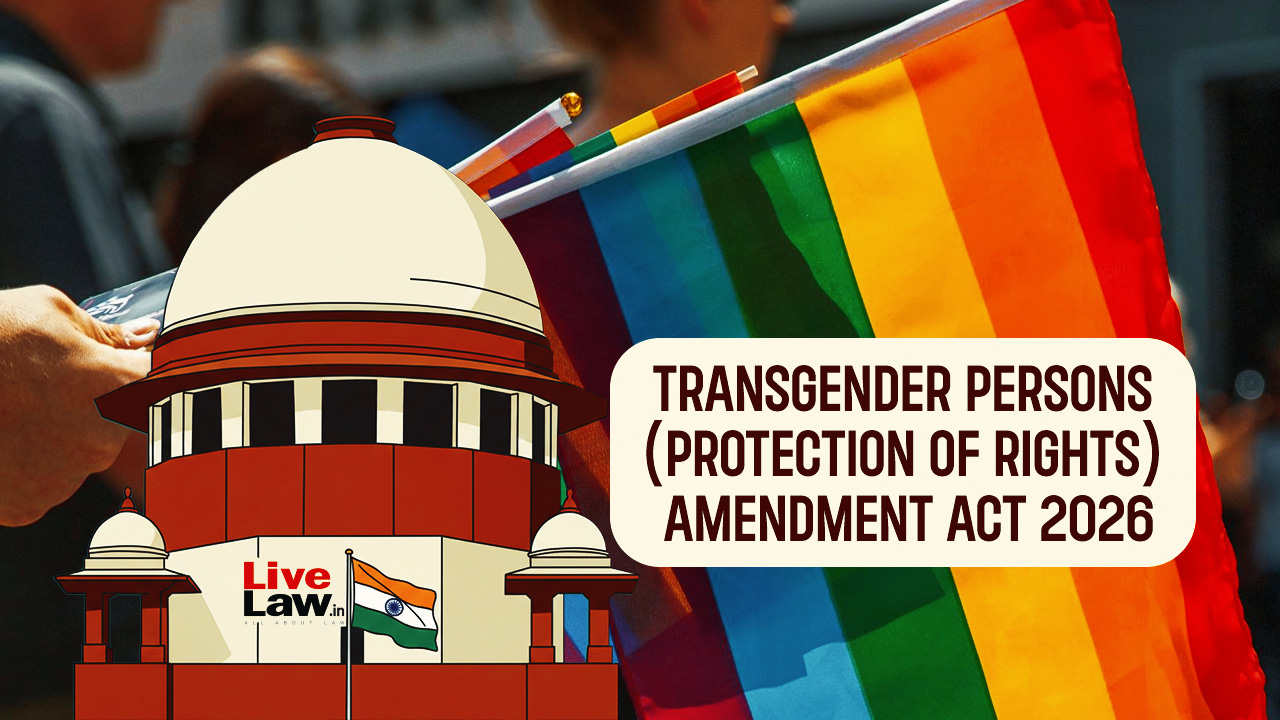
NEW DELHI: The Supreme Court of India has pressed the Union Government for a response regarding the challenge to the Transgender Persons (Protection of Rights) Amendment Act, 2026. The bench has raised concerns about potential misuses of self-identification rights and is set to further examine the issue. The petitions argue that the amendment violates previously established rights for transgender individuals, particularly the right to self-identification.
NEW DELHI: The Supreme Court today issued a notice to the Union Government and States/Union Territories regarding a series of writ petitions questioning the constitutional validity of the Transgender Persons (Protection of Rights) Amendment Act, 2026. This significant move arises as the court seeks to address concerns surrounding the implications of the amendment.
A bench led by Chief Justice of India Surya Kant and Justice Joymalya Bagchi indicated that the matter would require careful consideration, with a return notice set within six weeks. The Chief Justice raised points of potential misuse surrounding self-identification of gender, suggesting that the amendment may open avenues for individuals to exploit gender-based benefits. “There are people who can masquerade [as transgender persons] to corner these benefits,” CJI Kant expressed.
Senior Advocate Dr. Abhishek Manu Singhvi, who represented the petitioners, argued that the amendment undermines the right to self-identification established by the Supreme Court in the historic NALSA case. He emphasized that the 2014 ruling declared self-recognition of gender as a fundamental right, essential for personal dignity and autonomy. Singhvi asserted that criminalizing individuals undergoing gender-affirming treatment contradicts these fundamental rights.
As discussions deepened, the Solicitor General of India, Tushar Mehta, clarified that the amendment targets coercion and forced transitions, not the rights of individuals choosing to identify as transgender. This contentious debate was further complicated by the argument that the amendment displaces the essence of self-identification in favor of medical evaluations by a District Magistrate, which could jeopardize the rights and dignity of many in the transgender community.
The case is particularly poignant as it addresses provisions that could impose barriers to legal recognition and access to government benefits for transgender individuals. The petitioners argue that their constitutional rights, including those outlined in Articles 14, 15, 19, and 21, are at risk due to the invasive nature of the amendment. The Supreme Court's upcoming decisions will shape not only the future of transgender rights in India but also the broader discourse on personal autonomy and dignity in legal contexts.
As the discourse unfolds, it remains to be seen how this pivotal case will influence not just the rights of transgender persons but also the legislative landscape in India. Legal experts and advocates are watching closely as the arguments take center stage in this urgent human rights matter.
Discussion
Loading comments...