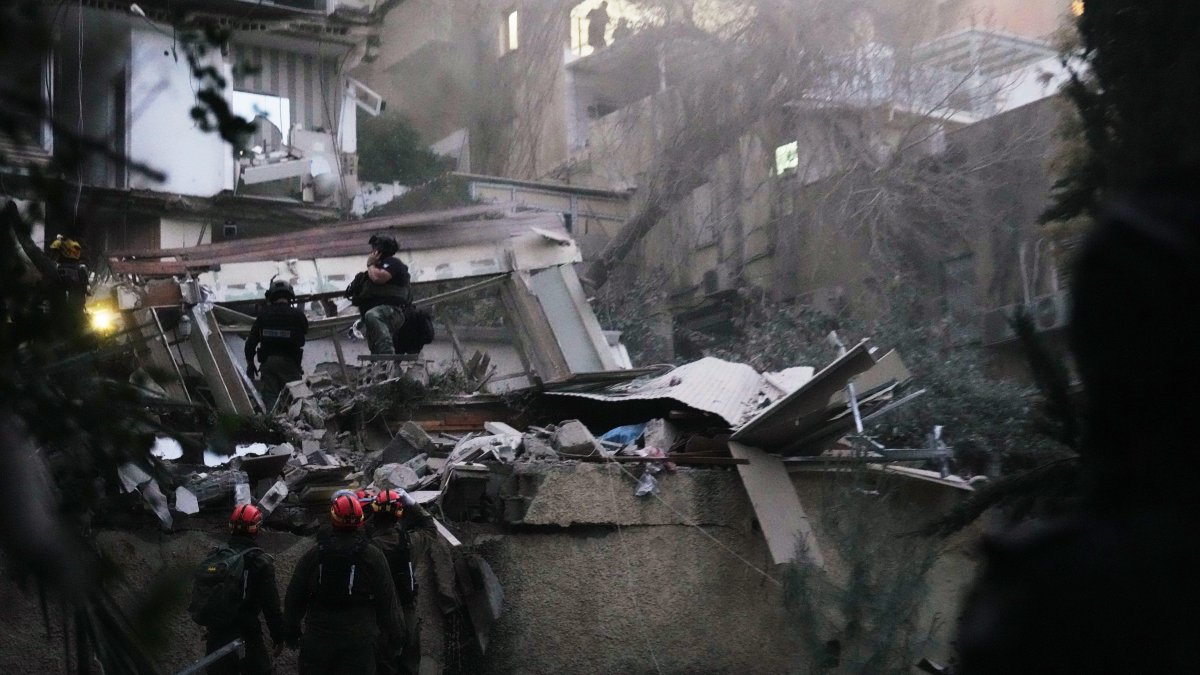
WASHINGTON D.C.: In a press conference, Iran rejected a proposed 45-day ceasefire, demanding a permanent end to hostilities. U.S. President Donald Trump warned of severe military actions against Iran if a deal is not reached by Tuesday evening. The escalating situation raises international concerns regarding potential civilian casualties amidst ongoing military engagements.
WASHINGTON D.C.: The political landscape has intensified as Iran unequivocally rejected a proposed 45-day ceasefire, asserting the need for a permanent cessation of hostilities. Mojtaba Ferdousi Pour, head of the Iranian diplomatic mission in Cairo, expressed the nation's stance, stating, “We only accept an end of the war with guarantees that we won’t be attacked again." This firm rejection comes amid a backdrop of escalating military engagements, with recent Israeli and U.S. attacks resulting in significant casualties in Iran.
During a brash press conference, U.S. President Donald Trump made it clear that he remains unconcerned about possible consequences of military action, stating rather provocatively his intention to destroy Iran’s infrastructure if Tehran fails to comply with demands by Tuesday night. “We have a plan, because of the power of our military, where every bridge in Iran will be decimated by 12 o’clock tomorrow night,” he warned, describing potential attacks on civilian infrastructure as inconsequential.
Notably, the United Nations has weighed in on the situation, with Secretary-General Antonio Guterres reminding the U.S. of international laws prohibiting attacks on civilian infrastructure. The U.N. cautioned that even if such infrastructure were considered military objectives, any resulting civilian casualties could potentially be classified as war crimes.
The situation is further complicated by a lack of support from Trump's NATO allies and Pacific partners, with the president expressing frustration over their hesitance to provide assistance in the region. “You know who else didn’t help us? Australia didn’t help us. Japan didn’t help us,” Trump pointedly remarked, illuminating the precarious nature of international alliances.
As military plans for the upcoming weeks are greenlighted, tensions remain high, and the eyes of the world are fixed on the volatile interplay between Iran and the United States. The unfolding events raise serious concerns about the ramifications for regional stability and civilian safety in the event of increased hostilities.
Discussion
Loading comments...