India Denounces China's Infrastructure Development in Shaksgam Valley
Synced from Source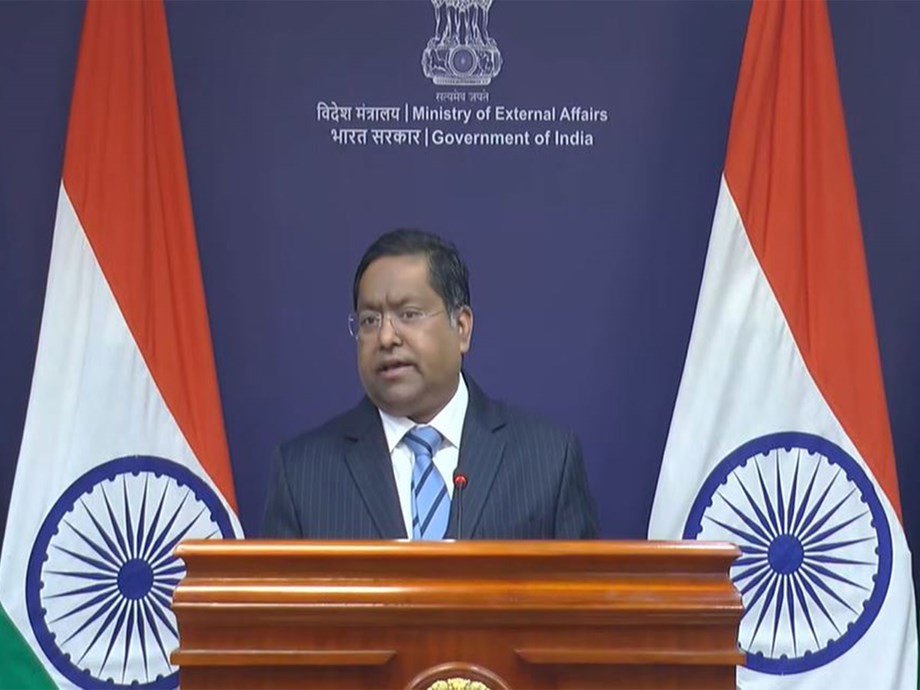
NEW DELHI: India has firmly rejected China's infrastructure projects in the Shaksgam Valley, calling them 'illegal and invalid.' The Ministry of External Affairs reiterated that the territory remains Indian, challenging the 1963 boundary agreement with Pakistan. India's stance underscores ongoing tensions over regional sovereignty and Chinese military encroachment.
NEW DELHI: The Indian government has taken a resolute stance against China's recent infrastructure development efforts in the Shaksgam Valley, deeming the initiatives as 'illegal and invalid.' This declaration was made by the Ministry of External Affairs (MEA) spokesperson Randhir Jaiswal during a press briefing, where he reiterated India's unwavering claim over the contested territory.
Jaiswal stated clearly, "Shaksgam Valley is an Indian territory. The so-called China-Pakistan boundary agreement of 1963 has never been recognized by India. We reject the China-Pakistan Economic Corridor, which infringes upon Indian territory under Pakistan's illegal occupation." This assertion reflects India's longstanding position concerning the region, which has been a source of contention for decades.
The spokesperson underscored concerns regarding China's construction activities, particularly highlighting their military infrastructure within the Shaksgam Valley, an area passed to China by Pakistan under the disputed 1963 agreement. India has continuously opposed any attempts to alter the status quo in the region, maintaining its rights over Jammu and Kashmir, including Ladakh, which it considers integral to the nation. Jaiswal also noted that India regularly communicates its objections to both China and Pakistan, stressing the importance of respecting territorial boundaries.
This development is crucial as it not only highlights the complexities of regional geopolitics but also underscores the potential for escalated tensions in an already volatile zone. The Indian government's firm stance emphasizes its commitment to defending its territorial integrity, which resonates deeply with its citizens and underlines the significance of sovereignty in international relations. The ongoing disputes in these areas continue to shape diplomatic narratives across the South Asian region.
Discussion
Loading comments...