US attacks Venezuela LIVE: Maduro to appear in court today on drug trafficking charges
Synced from Source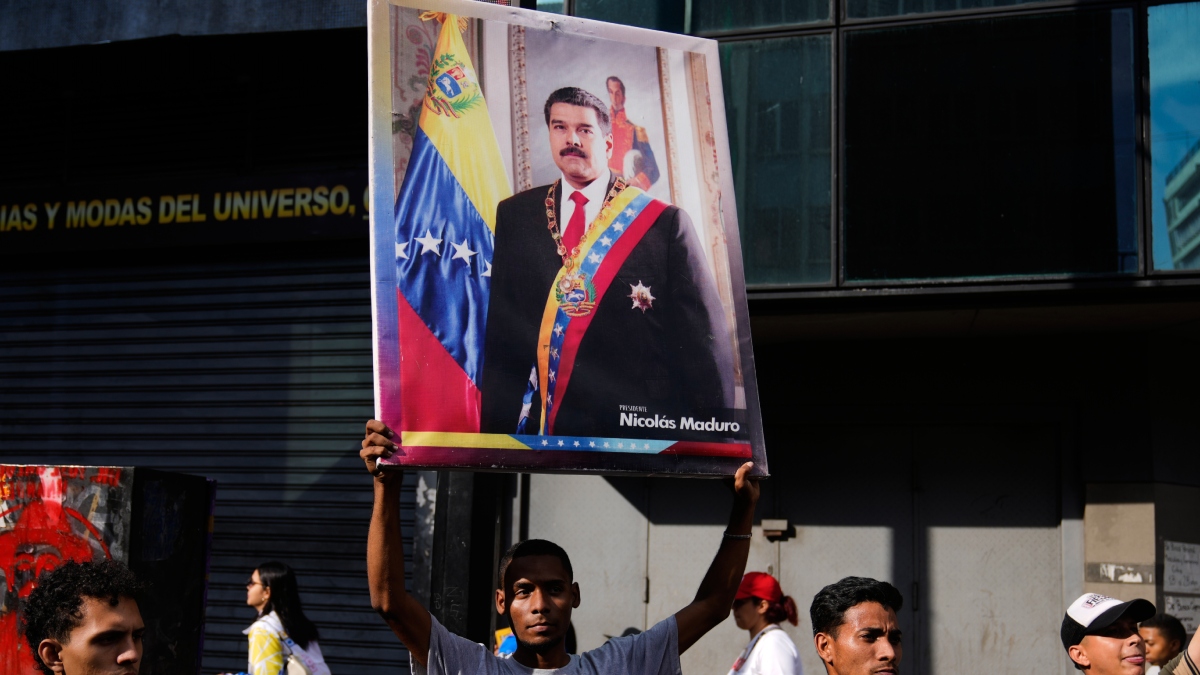
LIVE: Venezuela’s Maduro to appear in court, Rodriguez offers hand to US Al Jazeera
Venezuelan President Nicolas Maduro was captured along with his wife by the US forces on Saturday night and was brought to New York city where he will face criminal charges. Meanwhile, United States President Donald Trump announced that till a power transition happens in the South American nation, the US will run Venezuela. But, Secretary of State Marco Rubio suggested Sunday that the United States would not take a day-to-day role in governing Venezuela other than enforcing an existing oil quarantine on the country. In the absence of Maduro, Venezuela's Supreme Court ordered the country's Vice President Delcy Rodríguez to take on as the acting president of the country. However, hours after Venezuela's Vice President was appointed as interim President of the country, US President Donald Trump warned that she may have to pay a "bigger price than Maduro" if she doesn't do what he thinks is right for the South American country.
Delcy Rodríguez, Venezuela’s acting president, has invited the United States to engage with her government on a “cooperation agenda” following the capture of President Nicolás Maduro. In a statement released late Sunday, Rodríguez struck a conciliatory tone, emphasizing the need for collaboration grounded in international law and shared development goals. She called for a “balanced and respectful” relationship between Caracas and Washington, underlining her administration’s commitment to peace and dialogue. “We extend an invitation to the US government to work together on a cooperation agenda, aimed at shared development, within the framework of international law, and to strengthen lasting community coexistence,” Rodríguez said.
Deposed Venezuelan President Nicolas Maduro is set to make his first appearance Monday in an American courtroom on the narco-terrorism charges the Trump administration used to justify capturing him and bringing him to New York. Maduro and his wife are expected to appear at noon before a judge for a brief, but required, legal proceeding that will likely kick off a prolonged legal fight over whether he can be put on trial in the US. The couple will be brought from a Brooklyn jail to a Manhattan courthouse just around the corner from the one where President Donald Trump was convicted in 2024 of falsifying business records.
Venezuela's Defence Minister Vladimir Padrino Lopez on Sunday strongly condemned the arrest of President Nicolas Maduro Moros by the United States, terming it a "kidnapping" and demanding his immediate release along with that of First Lady Cilia Flores, reported Elcooperante. Addressing a press conference, Padrino Lopez said the detention of Maduro amounted to a serious violation of Venezuela's sovereignty and constitutional order. "Yesterday they kidnapped the person whom the Venezuelan people chose as their president, elected for the 2025-2030 term. Nicolas Maduro is the authentic and genuine constitutional leader of all Venezuelans," he said.
Nicolas Maduro Guerra, son of deposed Venezuelan dictator Nicolas Maduro, said that history will tell who the traitors are after a US military operation led to the capture of his father and First Lady Cilia Flores, who have been transferred to New York to face trial, local daily El-cooperative reported. In an audio message circulated on social media, Maduro Guerra warned of possible betrayal within the ruling movement and said history would expose those responsible. "History will tell who the traitors were, history will reveal it. We will see," he said, hinting at an internal conspiracy within Chavismo.
The death count from the US operation in Venezuela has risen to 80, according to New York Times report.
US President Donald Trump on Monday warned Venezuelan interim President Delcy Rodriguez may have to pay a bigger price than ousted leader Nicolas Maduro "if she doesn't do what's right." He also warned of a fresh military intervention in Venezuela, saying Washington is prepared to launch a “second wave” of attacks if the country’s interim leadership fails to comply with American demands. READ
US President Donald J Trump said, "...We need Greenland from a national security situation. It is so strategic and right now Greenland is covered with Russian and Chinese ships all over the place. We need Greenland from the standpoint of national security..."
An American military operation in Venezuela killed 32 Cuban officers over the weekend, the Cuban government said Sunday in the first official acknowledgement of the deaths. The Cuban military and police officers were on a mission the Caribbean country's military was carrying out at the request of Venezuela's government, according to a statement read on Cuban state TV on Sunday night. What the Cubans were working on in the South American nation was unclear, but Cuba is a close ally of Venezuela's government has sent military and police forces to assist in operations for years.
Venezuelan opposition leader Edmundo Gonzalez Urrutia on Sunday said the recent US intervention in Venezuela has marked a pivotal moment in the country's political history, noting the capture of President Nicolas Maduro, but emphasising that the road to democratic transition remains incomplete. Gonzalez Urrutia reiterated calls for the unconditional liberation of political prisoners in a video message shared on X.
Trump told reporters aboard Air Force One that "a lot of Cubans were killed" during the intervention to capture Maduro. He didn't specify how many Cubans were killed but said "there was a lot of death on the other side." Asked whether he was considering taking military action against Cuba, Trump said the country is "going down for the count." The US has said Cuba, a close ally of Maduro's administration, provided security advisers to Venezuela’s government.
US Vice-President JD Vance on Sunday defended Washington's military action related to Venezuela, during which they captured the country's president and deposed dictator Nicolas Maduro and his wife, arguing that the South American nation has played a significant role in drug trafficking and has long used expropriated oil assets to fund what he described as "narcoterrorist activities". Responding to criticism that Venezuela has little connection to the global drug trade, Vance, in a post on X, said that such claims were misleading, stressing that cocaine trafficking remains central to the finances of Latin American drug cartels. "You see a lot of claims that Venezuela has nothing to do with drugs because most of the fentanyl comes from elsewhere. First off, fentanyl isn't the only drug in the world, and there is still fentanyl coming from Venezuela, or at least there was," his post read. "Second, cocaine, which is the main drug trafficked out of Venezuela, is a profit center for all of the Latin America cartels. If you cut out the money from cocaine (or even reduce it), you substantially weaken the cartels overall. Also, cocaine is bad too!," it added.
At least 40 people, including military personnel and civilians, were killed in a US strike on Venezuela early Saturday, The New York Times reported, citing a senior Venezuelan official, who spoke on condition of anonymity. Washington carried out a "large-scale strike against Venezuela", and Nicolas Maduro and his wife, Cilia Flores, were captured and flown out of the country.
Venezuelan President Nicolas Maduro and his wife, Cilia Flores, are set to appear before a federal judge on Monday (local time), after US authorities confirmed that the case will be heard in the Southern District of New York on Sunday, CBS News reported. The spokesperson said that Maduro and his wife are scheduled to appear before a federal court at 12 pm on Monday.
Secretary of State Marco Rubio suggested Sunday that the United States would not take a day-to-day role in governing Venezuela other than enforcing an existing "oil quarantine" on the country, a turnaround after President Donald Trump announced a day earlier that the US would be running Venezuela following its ouster of leader Nicolás Maduro. Rubio's statements on TV talk shows seemed designed to temper concerns about whether the assertive American action to achieve regime change might again produce a prolonged foreign intervention or failed attempt at nation-building.
US President Donald Trump told The Atlantic on Sunday in a telephone interview that Delcy Rodríguez, Venezuela's vice president, could "pay a very big price" if she doesn't do what he thinks is right for the South American country. That contrasted with the Republican president's comments about Rodríguez on Saturday when he said Secretary of State Marco Rubio had spoken with her and that she was willing to do what the US thinks is needed to improve the standard of living in Venezuela. But Rodríguez has criticised Venezuelan leader Nicolas Maduro's removal from the country and has demanded that the US return him. Trump told the magazine that "if she doesn't do what's right, she is going to pay a very big price, probably bigger than Maduro." The president told the New York Post in an interview Saturday that the US wouldn't need to station troops in Venezuela if she “does what we want." (AP)
© 2009-2026 Independent News Service. All rights reserved.
Discussion
Loading comments...